
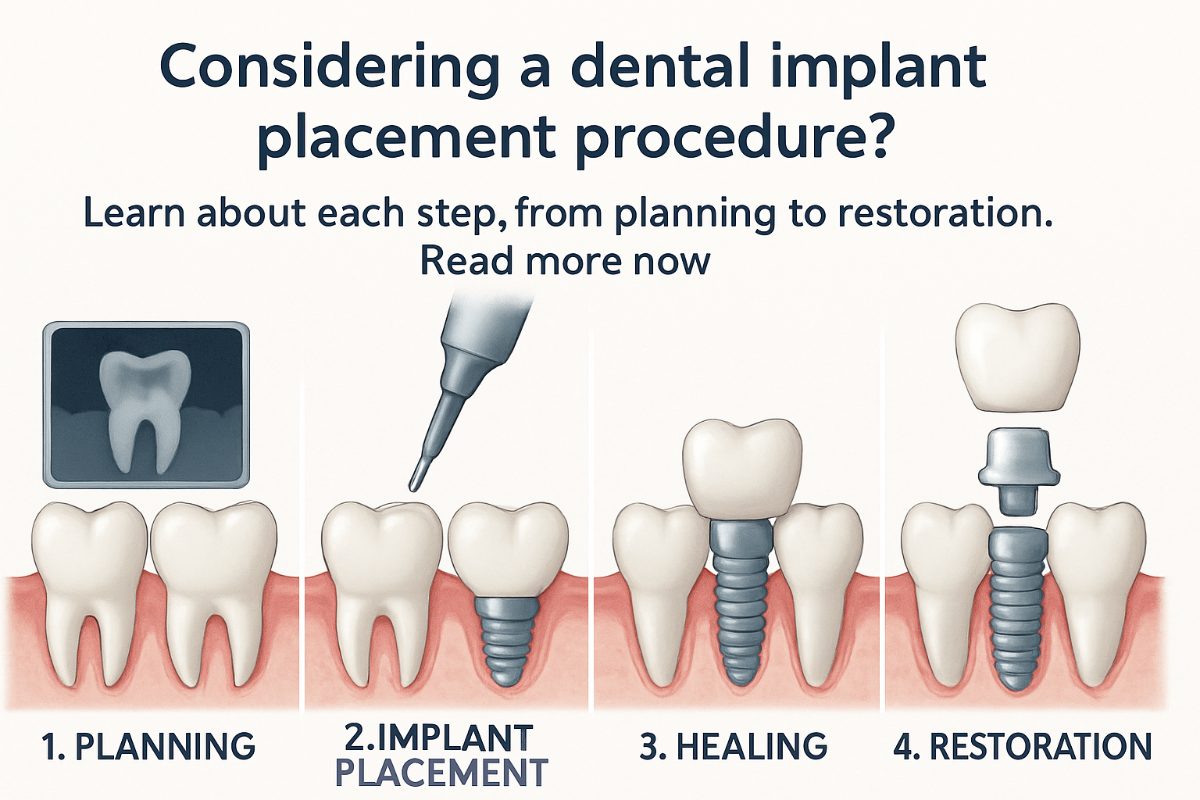
The dental implant placement procedure is the surgical and restorative process used to replace missing teeth with a metal implant, an abutment, and a crown (or bridge/denture). Many patients choose implants because they look, feel, and function like natural teeth and can last for years. This post walks through the dental implant placement procedure step by step: the exam and planning, the surgery, healing, final restoration, who is a good candidate, recovery tips, risks, how technology helps, and next steps.
What Is a Dental Implant?
A dental implant is a small titanium screw placed into the jawbone to act as an artificial tooth root. Three main parts make up the system: the implant (root), the abutment (connector), and the crown (the visible tooth). Implants restore chewing, speech, and appearance while helping prevent bone loss that occurs after tooth loss.
Step-by-Step dental implant placement procedure
Initial exam and planning
The process starts with a medical and dental history, a clinical exam, and imaging such as X-rays or CBCT scans. Digital intraoral scans may be taken to map tooth and gum shape. These steps help the team decide implant size, location, and whether additional treatments like bone grafts are needed. Good planning reduces surprises during the procedure.
Surgical placement of the implant
On surgery day, local anesthesia or sedation is used for comfort. The dentist or surgeon makes a small opening in the gum, drills a precise hole in the bone, and places the titanium implant. The gum may be stitched, and you receive post-op instructions on pain control, oral care, and activity. Many implants are placed in one visit; timing for the next steps depends on healing.
Healing and osseointegration
Healing usually takes several weeks to a few months while the bone fuses to the implant — a process called osseointegration. During this time avoid hard foods on the site and follow cleaning instructions. Normal signs include mild swelling and gradual reduction in discomfort. Excessive pain, persistent swelling, or fever are warning signs that need prompt attention.
Placing the abutment and final restoration
After osseointegration, the abutment is attached to the implant and an impression or digital scan is taken for the final crown, bridge, or denture. The restoration is fabricated to match your bite and appearance, then adjusted and permanently placed. The result looks and functions like a natural tooth.
Who Is a Good Candidate?
Good candidates are in generally good health, have adequate jawbone volume, and healthy gums. Smoking, uncontrolled diabetes, certain medications, or little bone may require special planning or extra procedures like bone grafts or sinus lifts. Your clinician evaluates risks and customizes the plan.
What To Expect During Recovery and Aftercare
Pain management and swelling
Most patients have mild to moderate discomfort controllable with over-the-counter pain relievers or prescription medicine. Ice packs and rest help reduce swelling.
Diet, activity, and oral hygiene
Stick to soft foods for several days, avoid strenuous activity for a short period, and keep the area clean with gentle rinsing and careful brushing. Follow any specific cleaning tools or instructions your clinician gives.
Follow-up visits and success checks
Follow-ups track healing, tissue health, and implant stability with clinical checks and occasional X-rays. Regular dental visits help ensure long-term success.
Risks, Complications, and How They’re Minimised
Common risks include infection, implant failure, or nerve irritation. Thorough planning, sterile technique, and proper case selection reduce these risks. Contact your dentist right away for signs like severe pain, unusual numbness, or spreading swelling.
How Advanced Technology Improves Outcomes
CBCT 3D scans guide precise implant positioning. Digital intraoral scanners improve fit and comfort of restorations. 3D-printed surgical guides and temporaries increase accuracy and reduce chair time, improving the overall dental implant placement procedure in Davenport, FL.
About Dr. Anna Dao and Zenith Dental & Implant Center
Dr. Anna Dao leads Zenith Dental & Implant Center, offering concierge-level care and advanced implant solutions. Her practice provides comprehensive treatment from surgery through final restoration under one roof, focusing on complex rehab and patient comfort.
Next Steps: Is This Right For You?
If you’re considering a dental implant placement procedure in Davenport, FL, schedule a consultation to review your health, imaging, and options. Bring questions about timeline, costs, risks, and recovery so you can make an informed choice and plan your next steps.